

Nissan 370z Performance Tuning - Naturally Aspirated Modifications - Stage 1
Ultimate Guide to building an NA 370z
The Nissan 370Z has earned a cult following for its raw driving experience, rear-wheel-drive balance, and tunability. While many enthusiasts choose forced induction (turbocharging or supercharging), a well-built naturally aspirated (NA) 370Z offers a unique thrill — razor-sharp throttle response, linear power delivery, and a screaming high RPM limit.
In this guide, we’ll explore step by step how to build a naturally aspirated 370Z using carefully selected performance upgrades. We’ll cover expected power gains at both crank (flywheel kW) and wheel (dyno kW), and explains how each modification enhances your Z’s performance.
370z - AIR FLOW IN - AIR FLOW OUT - STAGE 1
370z NA Simple Upgrades - Stage 1
Unlock extra performance in your Nissan 370Z NA with simple airflow upgrades. Discover how intakes, exhausts, and throttle body mods improve power, response, and efficiency.
Cold Long Intakes

Throttle Body

63mm Headers

UpRev Tuned
Nissan 370z NA Tuning
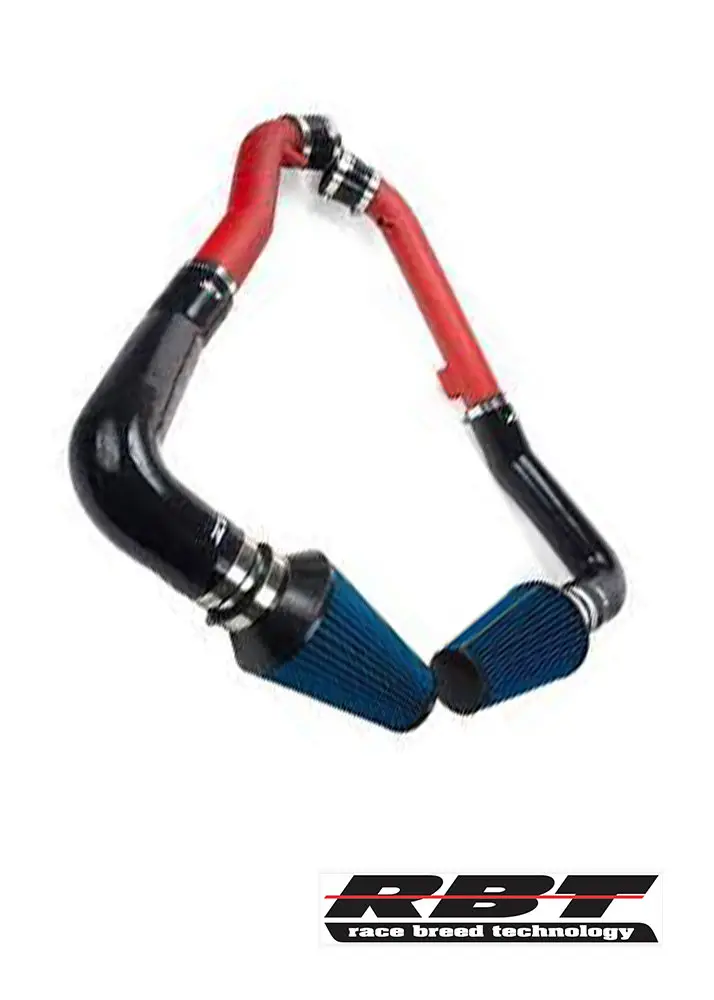
2.5” Long Cold Air Intakes
Specification:
Dual 2.5-inch Cold Air Intakes
Relocated high-flow filters with smoother piping
Designed to maximize airflow efficiency
What it offers:
Upgrading the stock air intake to a 2.5″ Cold Air Intake allows the engine to breathe far more efficiently. With smoother bends and less restrictive filters, the system delivers colder, denser air to the VQ37VHR’s combustion chambers. The result is stronger combustion and a noticeable bump in mid-to-high RPM power.
Power Gains:
Low range: +8 kW crank / +5 kW wheel
High range: +12 kW crank / +8 kW wheel
Throttle Body Spacer
Specification:
Machined aluminum spacer
Sits between throttle body and intake manifold
What it offers:
A throttle body spacer increases plenum volume and helps optimize airflow velocity. While modest on its own, it smooths throttle response and enhances the benefit of the intakes and ported manifold later.
Power Gains:
Low range: +2 kW crank / +1 kW wheel
High range: +3 kW crank / +2 kW wheel
Headers & Removal of Catalytic Converters
Specification:
Long-tube stainless steel headers
High-flow design for optimal exhaust scavenging
Catalytic converter delete for unrestricted flow
What it offers:
The factory exhaust manifolds and cats are restrictive. Replacing them with long-tube headers and removing the cats dramatically reduces backpressure. This unlocks high-RPM horsepower and adds a deeper, throatier exhaust tone.
Power Gains:
Low range: +15 kW crank / +10 kW wheel
High range: +22 kW crank / +15 kW wheel
Exhaust System: 57mm vs. 63mm
Specification Options:
57mm (2.25”) cat-back exhaust
63mm (2.5”) cat-back exhaust
What it offers:
The choice here depends on your goals. The 57mm system maintains low-end torque and throttle response, while the 63mm system maximizes top-end power at the cost of a slight low-RPM trade-off.
Power Gains:
57mm system: +6–8 kW crank / +4–6 kW wheel
63mm system: +10–12 kW crank / +7–9 kW wheel
UpRev Tune – Stage 1
Specification:
ECU remap using UpRev tuning software
Optimized air-fuel ratio, ignition timing, and VVEL control
What it offers:
With the intake, spacer, headers, exhaust, and decats installed, a proper UpRev tune is essential to unlock their full potential. Without tuning, you’ll leave power on the table and risk running lean.
Power Gains from tuning the first stage:
Low range: +8 kW crank / +6 kW wheel
High range: +12 kW crank / +9 kW wheel
Stage 1 Final Results: Estimated Output
There are a wide variety of suppliers for the above hardware upgrades, results will range based on options selected, adding the cumulative upgrades of the hardware along with the UpRev Tune gives us the start of a naturally aspirated powerhouse.
Stock 370Z: ~245 kW crank / ~210 kW wheel
Built NA 370Z with all upgrades:
Low range: ~260 kW crank / ~229 kW wheel
High range: ~275 kW crank / ~234 kW wheel
This puts a semi-built NA 370Z ahead of many small engine turbo charged hot hatches and even some V8 sports cars — all while maintaining linear, naturally aspirated throttle response that offers impeccable road or track manners!
Nissan 370z High Performance Naturally Aspirated - Stage 2
Nissan 370z Performance Tuning - Internal Engine Upgrades - Stage 2
Unlock serious performance from your Nissan 370Z’s VQ37VHR with a focused internal upgrade package. A healthy stock engine is comfortably up to 7,800 rpm; Stage Two improves airflow and valve train control so the motor keeps pulling hard beyond that point.
This upgrade results in naturally aspirated 370Z that red lines cleanly at 8,500, pulls harder through the upper range, and remains well-behaved on the road—happy to cruise at ~2,500 rpm on the motorway yet eager to scream around a track with confidence and composure.
Stage 2 of this guide, explains the step by step process of how to build a naturally aspirated 370Z using carefully selected performance upgrades, covering expected power gains at both crank (flywheel kW) and wheel (dyno kW), and explains how each modification enhances your Z’s performance.
370z Internal Hardware Upgrades
370z NA Internal Upg's - Stage 2
Unlock real NA power in your 370Z: manifold and head porting, JWT S2 cams, cooling and oil upgrades with an UpRev calibration for a clean 8,500-rpm red line and stronger top-end.

Ported Upper & Lower Manifold

Ported Head & JWT Cam S2

GTR Injectors & Upg Oil Pump
19 Row Oil Cooler & Sump Spacer
Nissan 370z NA Tuning - Stage 2
Upper & Lower Ported Manifold
Specification:
CNC ported manifold set
Enlarged runners with smoother airflow paths
What it offers:
Porting the upper and lower intake manifolds allows greater airflow velocity and distribution across all cylinders. This significantly improves midrange torque and sustains power all the way to redline.
Power Gains:
Low range: +8 kW crank / +5 kW wheel
High range: +12 kW crank / +8 kW wheel
Cylinder Head Porting, Polishing & Skimming
Specification:
Precision head porting
Polished intake/exhaust ports for smoother airflow
Head skimmed to increase compression slightly
What it offers:
By porting and polishing the heads, airflow turbulence is reduced, improving volumetric efficiency. Skimming the heads increases compression slightly, giving better throttle response and top-end pull.
Power Gains:
Low range: +12 kW crank / +8 kW wheel
High range: +18 kW crank / +12 kW wheel
Jim Wolf Technology S2 Cams
Specification:
JWT S2 high-lift, long-duration camshafts
Optimized for naturally aspirated builds
What it offers:
The JWT S2 cams open valves longer and further, dramatically improving airflow at high RPM. These cams truly wake up the VQ37VHR, making it aggressive past 6,000 rpm while still streetable.
Power Gains:
Low range: +20 kW crank / +14 kW wheel
High range: +28 kW crank / +20 kW wheel
GTR Injectors
Specification:
OEM Nissan GT-R 550cc injectors
Supports higher RPM fueling needs
What it offers:
While NA builds don’t consume as much fuel as boosted cars, upgraded injectors ensure safe and consistent fueling under high revs and aggressive cam profiles. These also future-proof the setup should you add more aggressive mods later.
Power Gains:
Direct power gain: negligible
Enables cams and high-RPM fueling safely
Upgraded Oil Pump for 8,500 RPM
Specification:
High-capacity, performance oil pump
Designed to prevent oil starvation at high RPM
What it offers:
The stock VQ oil pump is sufficient for factory rev limits (~7,500 rpm). With cams and headwork pushing the motor higher, a performance oil pump ensures safe oil pressure at 8,500 RPM — critical for engine longevity.
Power Gains:
No direct gains, but allows safe high-RPM operation
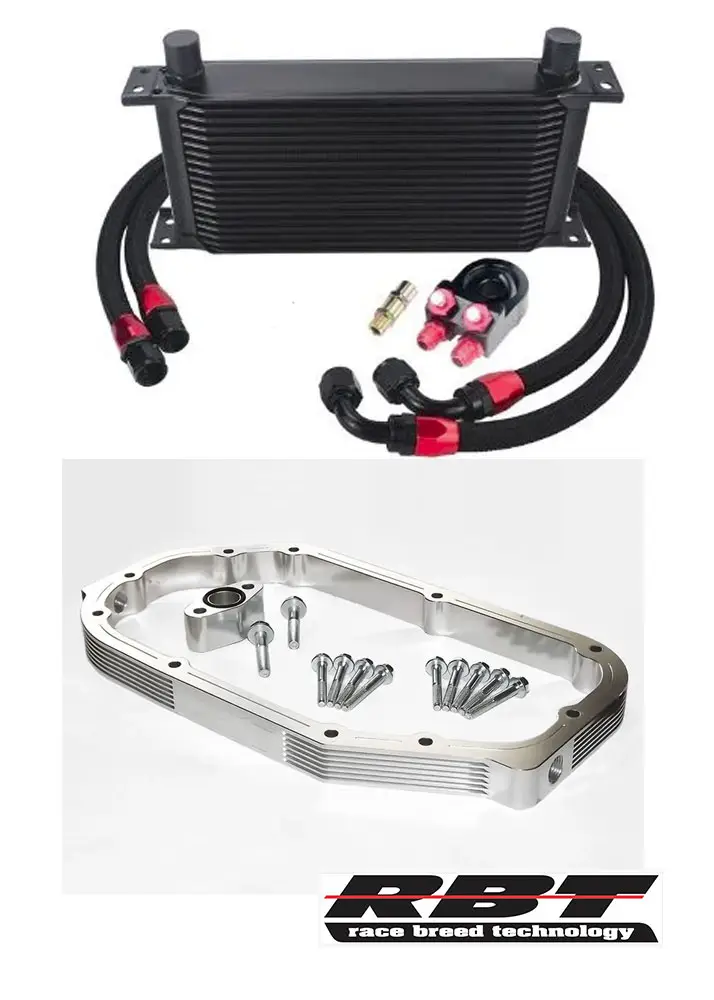
19-Row Oil Cooler & Oil Spacer (Extra 1L Capacity)
Specification:
19-row external oil cooler
Oil spacer plate adding 1L capacity
What it offers:
High-revving NA builds generate extreme heat. The upgraded oil cooler and spacer ensure consistent oil temps, preventing heat soak and protecting bearings under spirited driving and track use.
Power Gains:
No direct gains, but prevents power loss due to heat soak
Final UpRev Tune
Specification:
Comprehensive ECU recalibration
Adjusted for cams, injectors, ported heads, and extended RPM
What it offers:
This final tune ties everything together. Optimizing AFR, timing, cam phasing, and rev limit (increased to 8,500 RPM) maximizes every component’s contribution. Expect crisp throttle response, stronger mid-range, and a screaming top-end.
Power Gains from final tune:
Low range: +10 kW crank / +7 kW wheel
High range: +15 kW crank / +11 kW wheel
Stage 2 Final Results: Estimated Output
Stacking catalog gains isn’t realistic in the real-world of NA builds for the VQ37, with the exact parts listed (intakes, spacer, long-tubes & decats, 57/63 mm cat-back, ported upper/lower manifolds, head port/polish/skim, JWT S2 cams, GT-R injectors, oil pump, 19-row cooler) on 95 RON, sea-level, well-sorted UpRev tunes.
Final Results RBT have achieved are as follows:
Wheel power: 245–268 kW (≈329–359 whp)
Crank power: 288–316 kW (≈386–423 hp)
These numbers are realistic and stack up to Real World numbers!
JWT S2 cams + headwork + ported manifolds are where most of the NA gains come from; bolt-ons alone rarely exceed ~245–255 kW at the wheels.
Proper UpRev calibration (fuel, ignition, VVEL/cam phasing, raised limiter) is decisive.
A careful tuner can free 15–25 kW over a generic map on the same hardware.
Fuel & conditions: 95 RON at sea level, healthy motor, correct lash/chain timing, no heat-soak (19-row cooler helps maintain consistency). Ethanol was used for our top end power numbers.
FAQs Nissan 370z NA Tuning with UpRev

Nissan 370z Tuning with UpRev?
ECU Reflashing and Tuning
Custom calibration of factory ECU parameters for power, efficiency, and drivability.
Speed Limiter and Rev Limiter Adjustments
Raise or remove factory speed limiters, adjust rev limits for performance driving.
Fuel and Ignition Timing Optimization
Fine-tune ignition timing and AFRs for maximum power without compromising safety.
Multi-Map Switching for Street, Track, and Economy
Switch between maps with a button press—perfect for daily driving, track days, or long trips.
Check Engine Light Management for Mods
Disables unnecessary CELs after installing headers, exhausts, or other performance mods.
General Question
Stage 1 (intakes, spacer, long-tubes/decats, 57/63 mm cat-back, first UpRev):
~225–235 kW at the wheels (≈265–276 kW crank).Stage 2 (Ported U/L manifolds, head port/polish/skim, JWT S2 cams, GT-R injectors for headroom, oil system upgrades + final UpRev):
~245–268 kW at the wheels (≈288–315 kW crank).
Do you want Sound or Performance, they don't naturally go together - 57 mm (2.25"): stronger low-/mid-range, super streetable, pairs well with Stage 1.
Most people believe bigger is better - For Deeper Sound YES, Boosted Application YES
63 mm (2.5"): supposed to give better top-end flow, we have found when paired with a JWT S2 cams and a ported head there is enough headroom to still stay with 57mm both work in Stage1 and 2 with strong peak power up to 8,350 rpm, go 63 mm - When Boosted or you want a louder sound - 57 mm on a Stage 2 sounds real Race Tuned.
- Stock Motors and Stage 1 Motors can be moved up safely from 7500 to 7750 with an UpRev Tune
- Anything above this level Oil Cooling and Oil Pump should be considered to be safe on Stock Internals.
Stage 2 Street/Spirited: soft 8,150, hard 8,300, shift 8,000–8,150.
Track: soft 8,250, hard 8,350, shift 8,150–8,250.
Note: 7AT may upshift a touch early—set hard cut 100–200 rpm above the actual upshift point after a test pull.
Injectors: not for power, but for duty-cycle margin at extended rpm. Keep IDC ≤ 85% near redline.
Pump: healthy OEM often suffices for NA; on high-mileage cars a subtle upgrade (e.g., DW200/300) adds headroom.
Tune targets (NA, 95 RON): mid-load 13.0–13.2:1, WOT high-rpm 12.6–12.9:1; re-scale MAF and keep trims within ±5%.
19-row cooler, pan spacer, fresh gallery gaskets). For even more margin on track, consider: baffled pan/trap doors, and an ATI Super Damper. Monitor oil ≤ 115–120 °C and target ≥ 65–70 psi near redline.
Stock 370Z (VQ37VHR)
Factory power: ~245–248 kW crank (market dependent)
Typical wheel power: 200–210 kW (manual) · 195–205 kW (7AT)
0–100 km/h: 5.1–5.5 s (coupe; roadster typically +0.2 s)
¼-mile: 13.3–13.7 s @ 104–107 mph (167–172 km/h)
100–200 km/h: 17–20 s (manual on the quicker end)
370Z NISMO (350 hp / ~261 kW crank)
Factory power: ~261 kW crank
Typical wheel power: 215–225 kW
0–100 km/h: 4.8–5.2 s (coupe; roadster +~0.2 s)
¼-mile: 13.0–13.4 s @ 106–109 mph (171–175 km/h)
100–200 km/h: 16–18 s
370z NA Stage 1
- Wheel power: ~225–235 kW (≈265–276 kW crank)
- Performance (street tyres):
- 0–100 km/h: 4.8–5.2 s
- ¼-mile: 13.0–13.4 s @ 103–107 mph (166–172 km/h)
- 100–200 km/h: 14.5–16.0 s
370z NA Stage 2
- Wheel power: ~245–268 kW (≈288–316 kW crank)
- Performance (street tyres):
- 0–100 km/h: 4.2–4.8 s
- ¼-mile: 12.4–12.9 s @ 107–110 mph (172–177 km/h)
- 100–200 km/h: 11.8–13.0 s
Myths About Performance Upgrades
“Catalog gains stack—just add them up.”
False. Real-world results are not additive; airflow changes interact. Expect diminishing returns without cams/headwork and a proper calibration.
“Bigger exhaust/intakes always make more power.”
Not always. NA engines need gas velocity as much as volume. Too big too soon can hurt mid-range. For Stage 2 with cams/headwork, 57 and 63 mm still both work - It's more about what sound you want.
“JWT S2 cams kill low-end torque.”
With the right phasing (VVEL/UpRev) and matching head/manifold work, S2s broaden the band and add big top-end without sacrificing useful street torque.
About Us
Not Just Tuning Cars – Perfecting Experiences.
Because Your Ride Deserves the Best.
Excellence in Every Tune, Every Time.
From Workshop to Racetrack – Service You Can Feel.
Quick Links
Work Hours
- Mon - Wed :
- Thu - Fri :
- Saturday :
- Sunday :
- 09.00 AM - 05.00 PM
- 10.00 AM - 05.00 PM
- 09.00 AM - 02.00 PM
- Closed
RBT where a Really Bad Tune becomes a Rocket, Boosted, Thrill!

Copyright © 2022 All rights reserved.