

Nissan 350z Performance Tuning - Naturally Aspirated Modifications - Stage 1
Ultimate Guide to building an NA 350z DE
The Nissan 350Z has become a modern classic, loved for its raw driving feel, rear-wheel-drive dynamics, and incredible tuning potential. While many owners chase big numbers with forced induction (turbo or supercharger kits), a well-built naturally aspirated (NA) 350Z delivers its own unique rewards — crisp throttle response, linear power delivery, and the unmistakable howl of the VQ35 engine at high RPM.
In this guide, we’ll walk through step by step how to build a naturally aspirated 350Z using carefully chosen upgrades. We’ll outline expected power gains at both the crank (flywheel kW) and at the wheels (dyno kW), while explaining how each modification improves performance and driving enjoyment.
350z - AIR FLOW IN - AIR FLOW OUT - STAGE 1
350z NA Simple Upgrades - Stage 1
Unlock extra performance in your Nissan 350Z NA with simple airflow upgrades. Discover how intakes, exhausts, and spacer body mods improve power, response, and efficiency.

Cold Long Intakes

Throttle Body

63mm Headers

UpRev Tuned
Nissan 350z DE NA Modifications
Cold Air Intake (DE)
The DE’s single throttle intake benefits from aftermarket CAIs. Gains: +3–5 kW alone, +10 kW with tune.
Plenum Spacer
A must-have for DE engines due to uneven airflow distribution. A Motordyne 5/16” spacer improves mid-range torque and balances AFR. Gains: +5 kW.
Headers / Test Pipes
The DE responds very well to aftermarket headers. Gains: +12–15 kW with tune. Test pipes can add another +5 kW. Together, these are the biggest NA upgrades for the DE.
Exhaust System
Cat-backs increase flow and sound quality. Gains are modest (+3–5 kW) but pair well with headers and spacer.
ECU Tune – UpRev / EcuTek
Critical for safety and performance. Optimizes AFR and timing. Gains of +10–12 kW with bolt-ons. Can raise the rev limiter slightly.
Stage 1 Summary (DE)
Stock DE: ~200 kW crank
With bolt-ons + tune: ~225–235 kW crank (~190–195 kW wheels)
Nissan 350z HR NA Modifications
Cold Air Intakes (HR)
As detailed earlier — +5–8 kW alone, +12–15 kW with supporting mods. Improves throttle response and mid-range power.
Plenum Spacer
The HR already has a dual intake setup, but adding a quality plenum spacer (e.g., Motordyne) helps improve airflow balance across cylinders. Gains are modest on their own (+3–5 kW), but it enhances torque in the 3,000–5,000 rpm range.
Headers
The HR benefits significantly from aftermarket equal-length long-tube headers. These improve exhaust scavenging and reduce back pressure, unlocking +10–15 kW at the crank when tuned. The HR responds better here than the DE, making this a key upgrade.
High-Flow Cats / Test Pipes
Replacing restrictive factory cats with high-flow versions or test pipes increases flow, especially when combined with headers. Expect ~+5 kW additional over headers alone.
Exhaust System
A free-flowing cat-back (57–63 mm) pairs with headers and test pipes for both performance and sound. Expect ~+5 kW gains and improved throttle feel.
ECU Tune – UpRev / EcuTek
With bolt-ons installed, a custom tune is essential. Gains of +10–15 kW are realistic, plus optimized AFR, timing, and rev limiter control. The HR’s higher redline (7,500 rpm) makes this especially valuable.
Stage 1 Summary (HR)
Stock HR: ~220 kW crank
With bolt-ons + tune: ~240–250 kW crank (~205–210 kW wheels)
Nissan 350z High Performance Naturally Aspirated - Stage 2
Nissan 350z Performance Tuning - Internal Engine Upgrades - Stage 2
Unlock serious performance from your Nissan 350Z’s VQ35 (DE/HR) with a focused internal upgrade package.
A healthy stock engine is comfortable at factory limits (≈6,800 rpm on DE, ≈7,500 rpm on HR). Stage Two targets airflow and valvetrain control so the motor keeps pulling hard deeper into the upper rev range.
The result is a naturally aspirated 350Z that revs cleanly to an elevated limiter (HR typically 7,800–8,200 rpm; DE 7,200–7,600 rpm with proper oiling and valvetrain support), hits harder through the top end, and still behaves beautifully on the street—happy to cruise around 2,500 rpm on the motorway yet eager to sing on track with confidence and composure.
Stage 2 of this guide walks you step-by-step through building an NA 350Z using carefully matched upgrades. We’ll outline expected gains at the crank (kW) and at the wheels (kW) and explain how each modification—intake and manifold work, head porting/polishing, camshafts, fueling, and supporting oiling—contributes to real, repeatable performance.
350z Internal Hardware Upgrades
350z NA Internal Upg's - Stage 2
Unlock real NA power in your Nissan 350Z: port the manifolds and heads, fit JWT cams (S1/S2), add cooling and oiling upgrades, then finish with an UpRev calibration for a crisp raised redline (~7,200–7,600 rpm DE / ~7,800–8,200 rpm HR) and a much stronger top end.

Ported Upper & Lower Manifold

Ported Head & JWT Cam S2

GTR Injectors & Upg Oil Pump
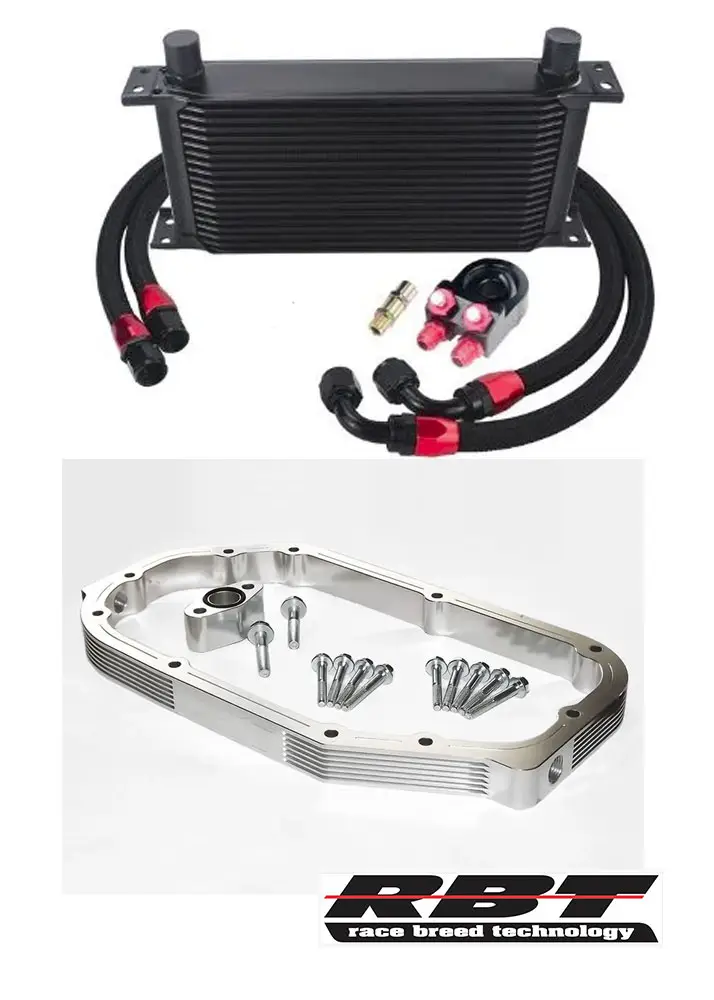
19 Row Oil Cooler & Sump Spacer
Nissan 350z DE NA - Stage 2
Ported Intake & Heads
Porting helps DE engines rev more freely. Gains: +8–10 kW.
Performance Cams
JWT S2 cams are a proven upgrade. Expect +20–25 kW gains tuned, with a stronger top-end.
Fuel System
GTR injectors and upgraded pump recommended for cammed builds.
Oil & Cooling
DE engines run hotter at high rpm. Oil cooler and upgraded pump recommended.
Stage 2 Summary (DE)
Fully built DE with cams, porting, fueling: ~260–265 kW crank (~215–220 kW wheels)
Nissan 350z HR NA - Stage 2
Ported Intake & Cylinder Heads
Smoothing and enlarging airflow pathways improves top-end breathing. Gains: +7–10 kW depending on supporting mods.
Performance Cams
JWT or GSC HR-spec cams (264–272° duration) significantly improve top-end output. Expect +18–22 kW gains tuned.
Fuel System
High-flow injectors (e.g., GTR 550 cc) and upgraded pump ensure safe fueling. Necessary at high rpm with cams.
Oil & Cooling
HR engines can run hot at sustained high rpm. An external oil cooler, baffled sump, and upgraded pump improve reliability.
Stage 2 Summary (HR)
Fully built HR with supporting mods and cams: ~270–280 kW crank (~230–240 kW wheels)
FAQs Nissan 350z NA Tuning with UpRev
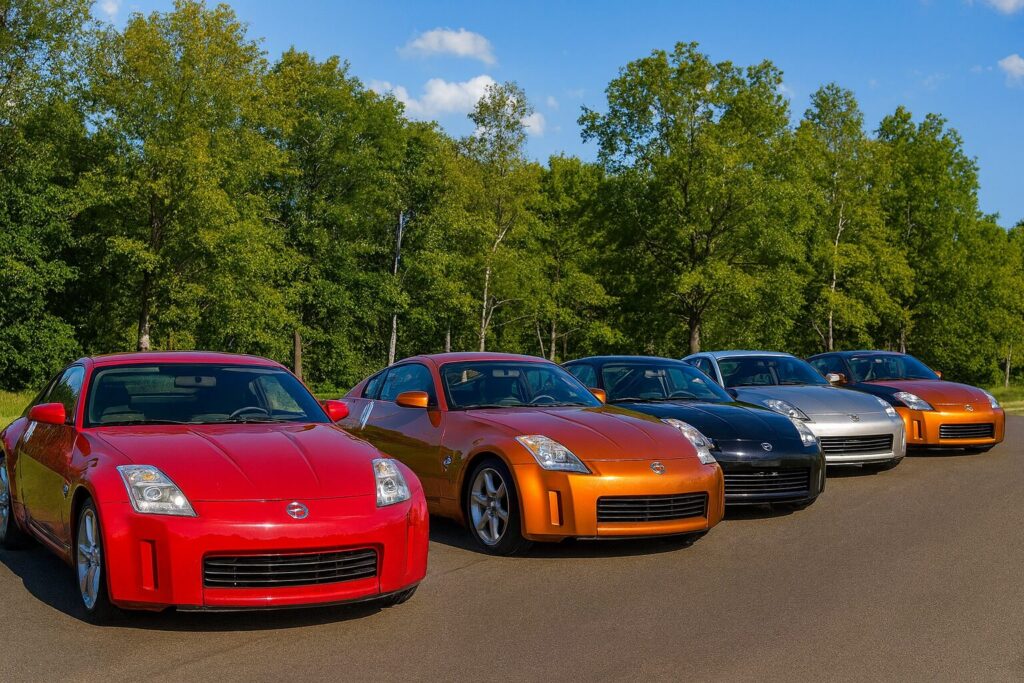
Nissan 350z Tuning with UpRev?
ECU Reflashing and Tuning
Custom calibration of factory ECU parameters for power, efficiency, and drivability.
Speed Limiter and Rev Limiter Adjustments
Raise or remove factory speed limiters, adjust rev limits for performance driving.
Fuel and Ignition Timing Optimization
Fine-tune ignition timing and AFRs for maximum power without compromising safety.
Multi-Map Switching (Requires an ECU Upgrade) for Street, Track, and Economy
Switch between maps with a button press—perfect for daily driving, track days, or long trips.
Check Engine Light Management for Mods
Disables unnecessary CELs after installing headers, exhausts, or other performance mods.
General Question
- Stage 1 (intakes, spacer, long-tubes/decats, 57/63 mm cat-back, first UpRev):
~190–210 kW at the wheels (≈225–250 kW crank).
- Stage 2 (Ported U/L manifolds, head port/polish/skim), JWT S2 cams, GT-R injectors for headroom, oil system upgrades + final UpRev):
~215–240 kW at the wheels (≈260–280 kW crank).
Do you want Sound or Performance, they don't naturally go together - 57 mm (2.25"): stronger low-/mid-range, super streetable, pairs well with Stage 1.
Most people believe bigger is better - For Deeper Sound YES, Boosted Application YES
63 mm (2.5"): supposed to give better top-end flow, we have found when paired with a JWT S2 cams and a ported head there is enough headroom to still stay with 57mm both work in Stage1 and 2 with strong peak power up to 8,350 rpm, go 63 mm - When Boosted or you want a louder sound - 57 mm on a Stage 2 sounds real Race Tuned.
- Stock Motors and Stage 1 Motors can be moved up safely from 7500 to 7750 with an UpRev Tune
- Anything above this level Oil Cooling and Oil Pump should be considered to be safe on Stock Internals.
Stage 2 Street/Spirited: soft 8,150, hard 8,300, shift 8,000–8,150.
Track: soft 8,250, hard 8,350, shift 8,150–8,250.
Note: 7AT may upshift a touch early—set hard cut 100–200 rpm above the actual upshift point after a test pull.
Injectors: not for power, but for duty-cycle margin at extended rpm. Keep IDC ≤ 85% near redline.
Pump: healthy OEM often suffices for NA; on high-mileage cars a subtle upgrade (e.g., DW200/300) adds headroom.
Tune targets (NA, 95 RON): mid-load 13.0–13.2:1, WOT high-rpm 12.6–12.9:1; re-scale MAF and keep trims within ±5%.
19-row cooler, pan spacer, fresh gallery gaskets). For even more margin on track, consider: baffled pan/trap doors, and an ATI Super Damper. Monitor oil ≤ 115–120 °C and target ≥ 65–70 psi near redline.
Stock 350Z (VQ35DE – early models)
Factory power: ~200–206 kW crank (market dependent)
Typical wheel power: 165–175 kW (manual) · 160–170 kW (auto)
0–100 km/h: 5.9–6.2 s (coupe; roadster +~0.2–0.3 s)
¼-mile: 14.1–14.5 s @ 98–101 mph (158–163 km/h)
100–200 km/h: 20–23 s (manual on the quicker end)
Stock 350Z (VQ35HR – facelift models)
Factory power: ~230 kW crank
Typical wheel power: 185–195 kW (manual)
0–100 km/h: 5.5–5.8 s (coupe; roadster +~0.2 s)
¼-mile: 13.6–14.0 s @ 101–104 mph (162–167 km/h)
100–200 km/h: 18–20 s
350Z NA Stage 1 (DE or HR)
Mods: Cold air intake, plenum spacer (DE), long-tube headers, decat/HFC, free-flow cat-back exhaust, custom UpRev tune.
Wheel power:
DE: ~190–200 kW (≈220–230 kW crank)
HR: ~205–215 kW (≈240–250 kW crank)
Performance (street tyres):
0–100 km/h: 5.2–5.5 s
¼-mile: 13.5–13.9 s @ 101–105 mph (162–169 km/h)
100–200 km/h: 16–18 s
350Z NA Stage 2 (cams + porting + fueling)
Mods: All Stage 1 plus JWT/GSC cams, ported intake/heads, upgraded injectors/fuel pump, oil cooling.
Wheel power:
DE: ~210–220 kW (≈250–260 kW crank)
HR: ~225–240 kW (≈270–285 kW crank)
Performance (street tyres):
0–100 km/h: 4.6–5.0 s
¼-mile: 12.9–13.3 s @ 106–110 mph (171–177 km/h)
100–200 km/h: 13–15 s
Myths About Performance Upgrades
“Catalog gains stack—just add them up.”
False. Real-world results are not additive; airflow changes interact. Expect diminishing returns without cams/headwork and a proper calibration.
“Bigger exhaust/intakes always make more power.”
Not always. NA engines need gas velocity as much as volume. Too big too soon can hurt mid-range. For Stage 2 with cams/headwork, 57 and 63 mm still both work - It's more about what sound you want.
“JWT S2 cams kill low-end torque.”
With the right phasing (VVEL/UpRev) and matching head/manifold work, S2s broaden the band and add big top-end without sacrificing useful street torque.
About Us
Not Just Tuning Cars – Perfecting Experiences.
Because Your Ride Deserves the Best.
Excellence in Every Tune, Every Time.
From Workshop to Racetrack – Service You Can Feel.
Quick Links
Work Hours
- Mon - Wed :
- Thu - Fri :
- Saturday :
- Sunday :
- 09.00 AM - 05.00 PM
- 10.00 AM - 05.00 PM
- 09.00 AM - 02.00 PM
- Closed
RBT where a Really Bad Tune becomes a Rocket, Boosted, Thrill!

Copyright © 2022 All rights reserved.